Consolidating knowledge management, training, and internal services for 20K employees

Background

Gateway, the BBC's intranet, was fragmented across departmental silos, including Production, HR, Procurement, and Legal.

Research showed navigation was confusing users due to a structure based on organisational hierarchy rather than user tasks, creating significant time waste for their 20,000 employees.

Challenge

I was tasked with re-platforming Gateway onto an internal CMS to realise technical cost savings and usability improvements.

Our key objective was to transition the internal culture from "publishing content" to "designing services."

CLIENT

BBC

INDUSTRY

Media & Broadcasting

TEAM

Product, Engineering, UX Design, UI Design, UX Research, Legal, Compliance

Outcomes

Service: Unified fragmented services into cohesive taxonomies, accessible design patterns, and service workflows.

Efficiency: Reduced CMS and editorial training time by 50%. Developed a platform to monitor service performance and continuous improvements.

Engagement: +20% year-on-year increase in positive service feedback.

Cost Savings: Lowered reliance on manual support teams through self-serve documentation and automated onboarding.

Scalability: Established a "Design Intelligence" foundation that allowed the BBC to launch new internal services in a standardised, metadata-driven ecosystem.

Discovering our user's needs and pain points

I conducted a full-service audit across the organisation to understand where the platform was failing users and editors alike.

I led discovery activities, taking action across:

Quantitative 

  • Conducted an audit across 10,000+ pages
  • Analysed analytics, behavioural data, and feedback
  • Audited journeys, workflows, and materials

Qualitative

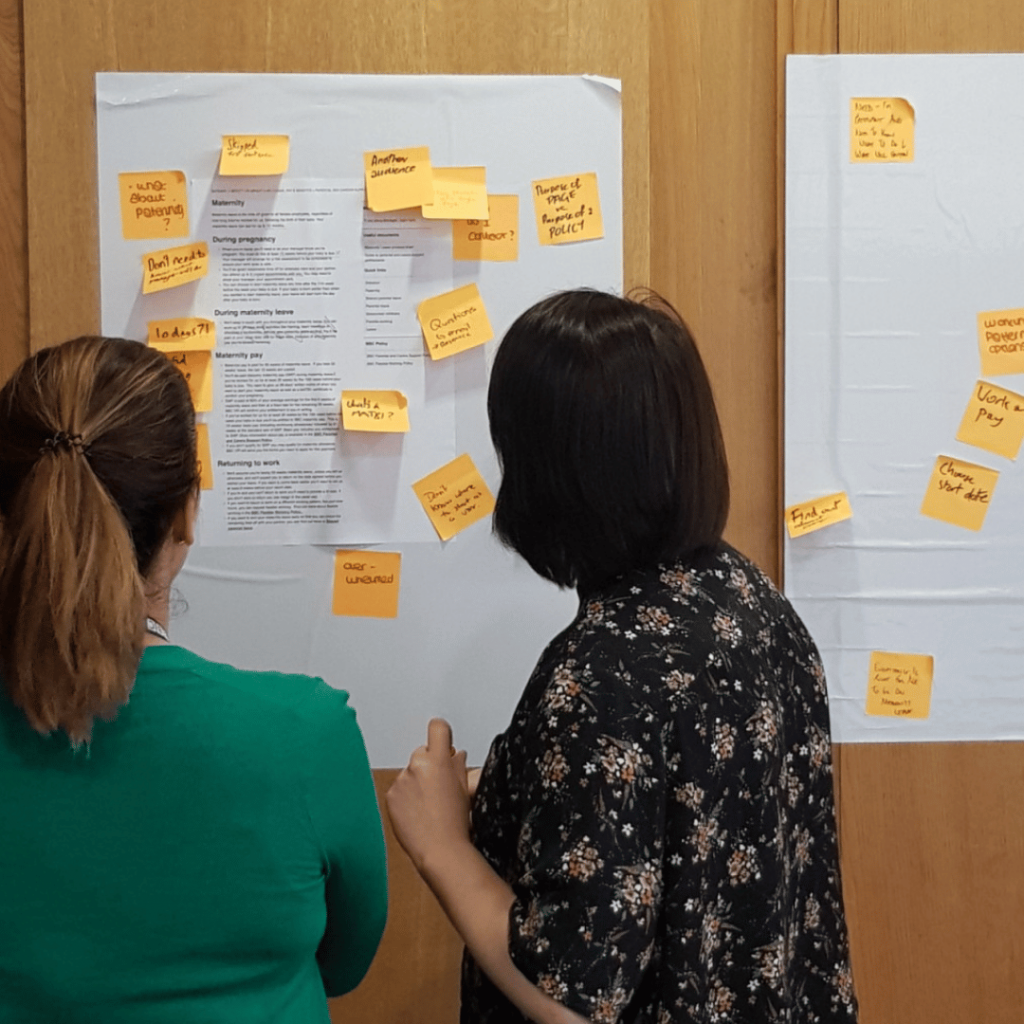
  • Facilitated workshops with senior stakeholders and SMEs
  • Mapped needs, friction points, and priorities
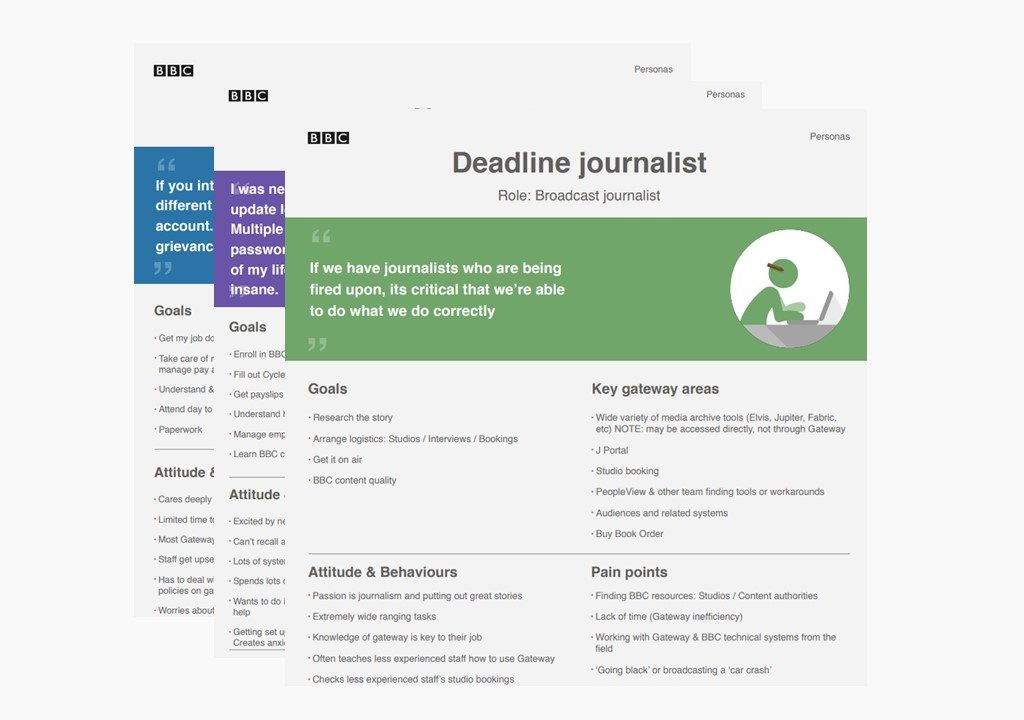
  • Interviewed editors, trainers, and HR teams
gateway-personas

Developing journey maps and blueprints

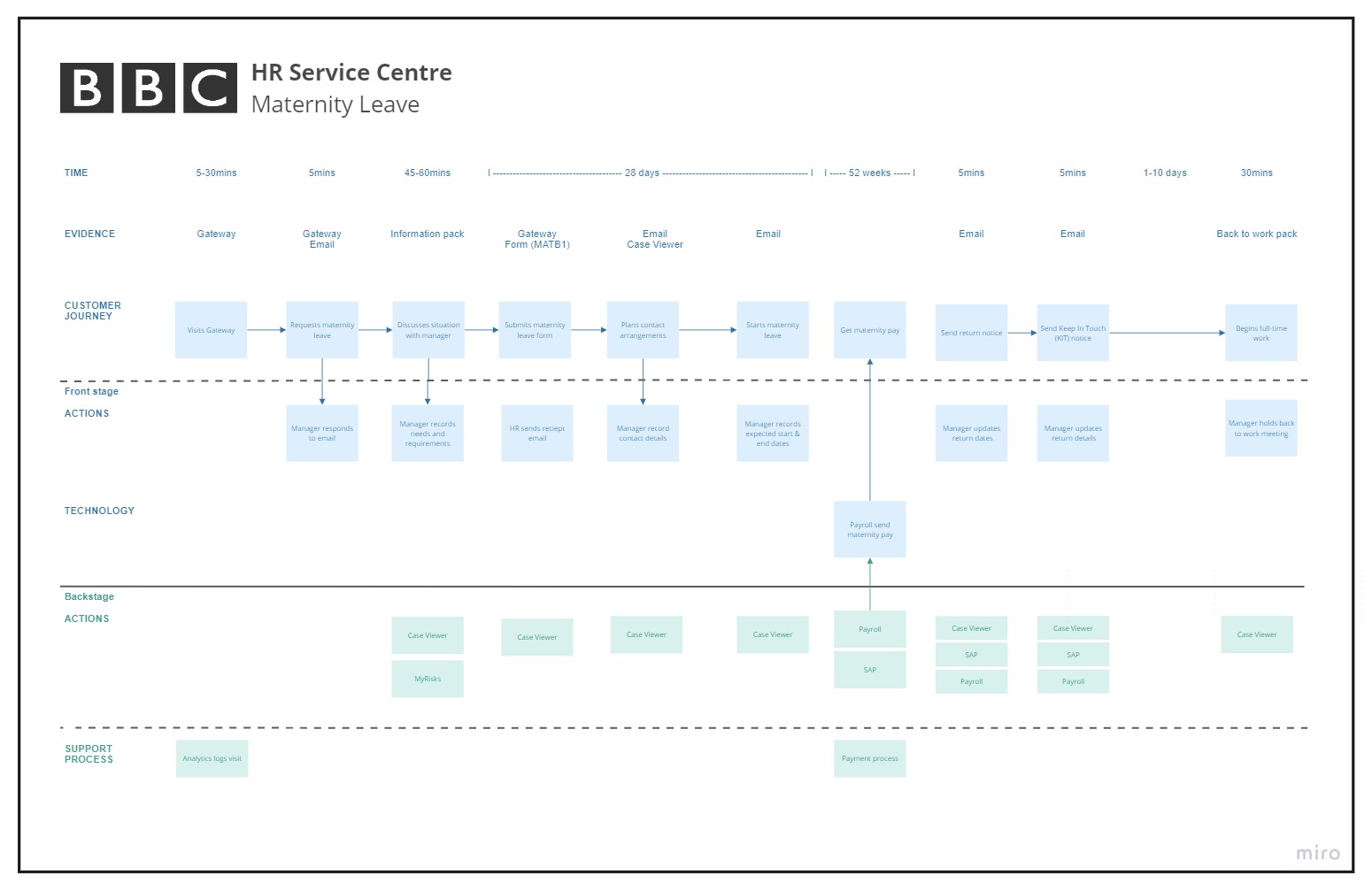
I mapped customer journeys across multiple internal services—identifying where employees struggled to complete tasks, where handoffs failed between teams, and where operational processes didn't match user expectations. Service blueprints revealed backstage complexity invisible to users but critical to service delivery.

maternity-leave-blueprint

Co-creating to explore options and choose solutions

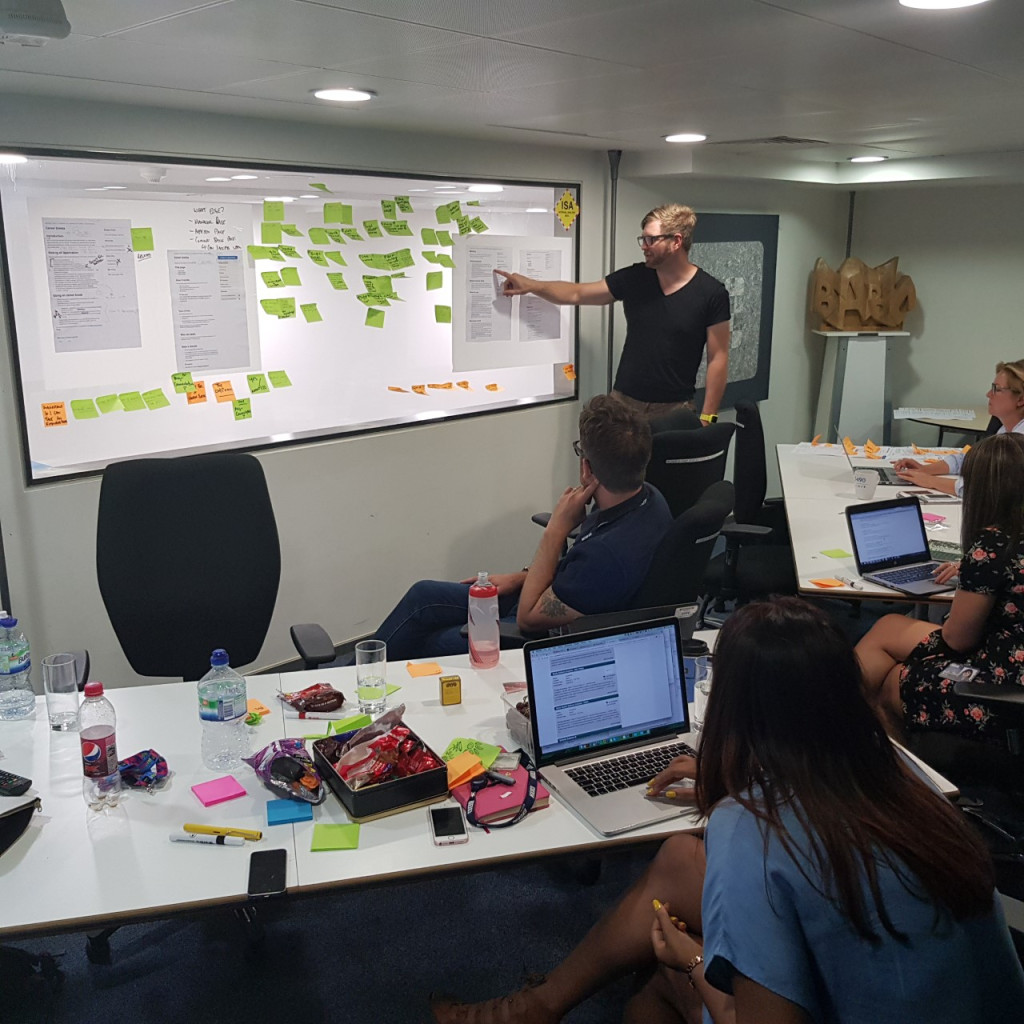
Service design is collaborative by nature. I facilitated cross-functional workshops bringing together HR, Training, Editorial, Product, and Tech teams to co-create solutions. These sessions surfaced overlapping workflows, legacy constraints, and aligned opportunities—ensuring teams had ownership of outcomes.

Developing an operational framework

I architected a task-based hierarchy with the goal to take subjects from departmental to subject and task ownership.

I developed a modular page and site matrix to ensure consistency across the 10,000-page migration, defining content by intent:

  • Learn: Explainer pages and policy definitions.

  • Do: Transactional pages (task-based).

  • Connect: Campaign, Project, and Network sites.

Using lean wastes to prioritise operations

I applied Lean waste to our design and delivery process to drive efficiency.

We established baselines to measure the ROI of our operational changes:

  • Inventory waste: Reducing the number of components requiring modification.

  • Defect waste: Minimised time spent removing duplicate content or fixing inconsistent site maps.

  • Waiting waste: Optimised the support model to reduce time spent responding to support calls and emails.

  • Extra processing waste: Reduced the need for users to download manual forms and policies to complete tasks.

Building and iterating our prototypes

Rather than perfecting designs in isolation, I prototyped service concepts early and tested them with real users. This iterative approach revealed insights we couldn't have anticipated—allowing us to refine journeys, templates, and operational workflows based on actual behaviour rather than assumptions.

  •  Designed lo-fi prototypes to validate service models
  • Released MVPs into live environments
  •  Gathered behavioral data and qualitative insights
  • Iterated based on real-world pain points
  • Tested IA concepts and navigation flows with users

Developing an onboarding engine

An important DesignOps win was building a community practice and support model for 300+ editors

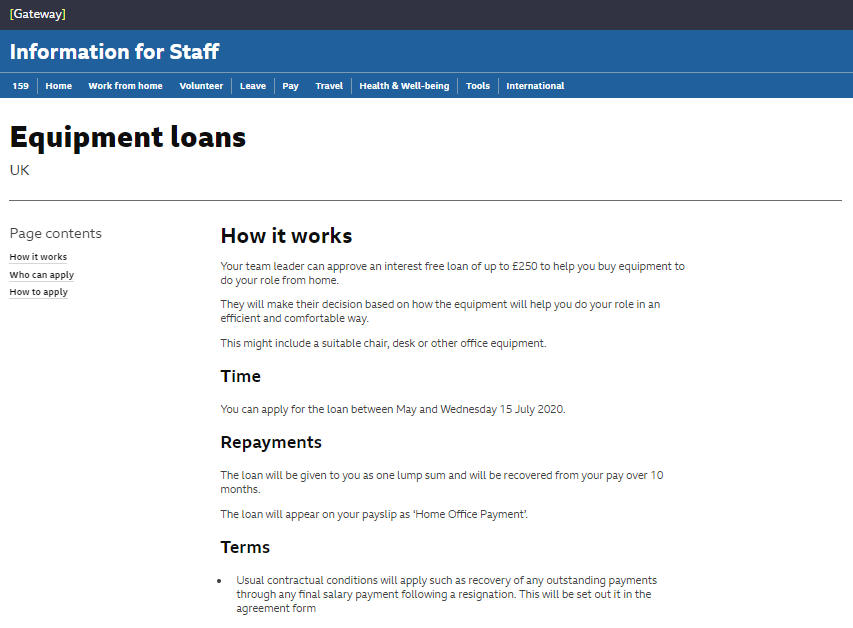
I replaced a manual, multi-week BBC Academy training process with an automated onboarding workflow.

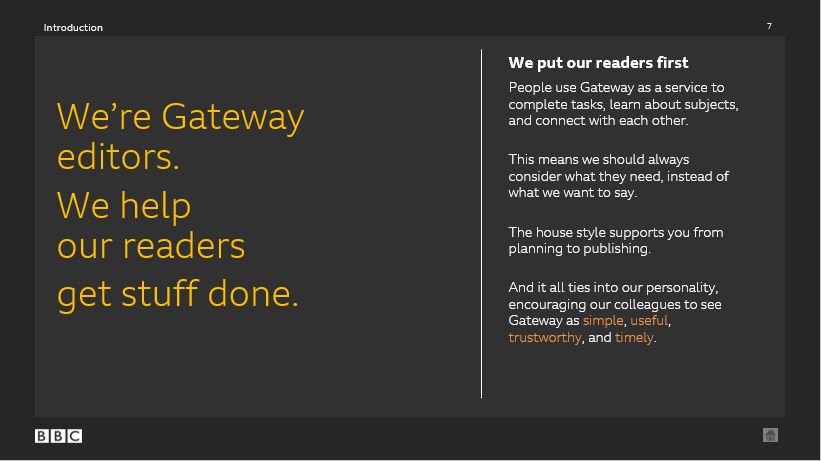
house style introduction

I partnered with Learning and Development professional to structure onboarding workflows, including sign-ups, training programmes, account provisioning, and responsibility agreements.

This reduced onboarding from several weeks to just 2 days, drastically increasing the productivity of internal teams.

Socialising new patterns with change management

Design at scale doesn't end at launch.

I partnered with Engineering to manage the integration of a tech stack to coordinate lead times and maintenance:

  • iSite CMS: Developed metadata schemas, patterns, and journeys

  • Trello and Slack: Coordinated project management and communication rituals.

  • iBroadcast: Centralised asset management for quality-optimised video and media.

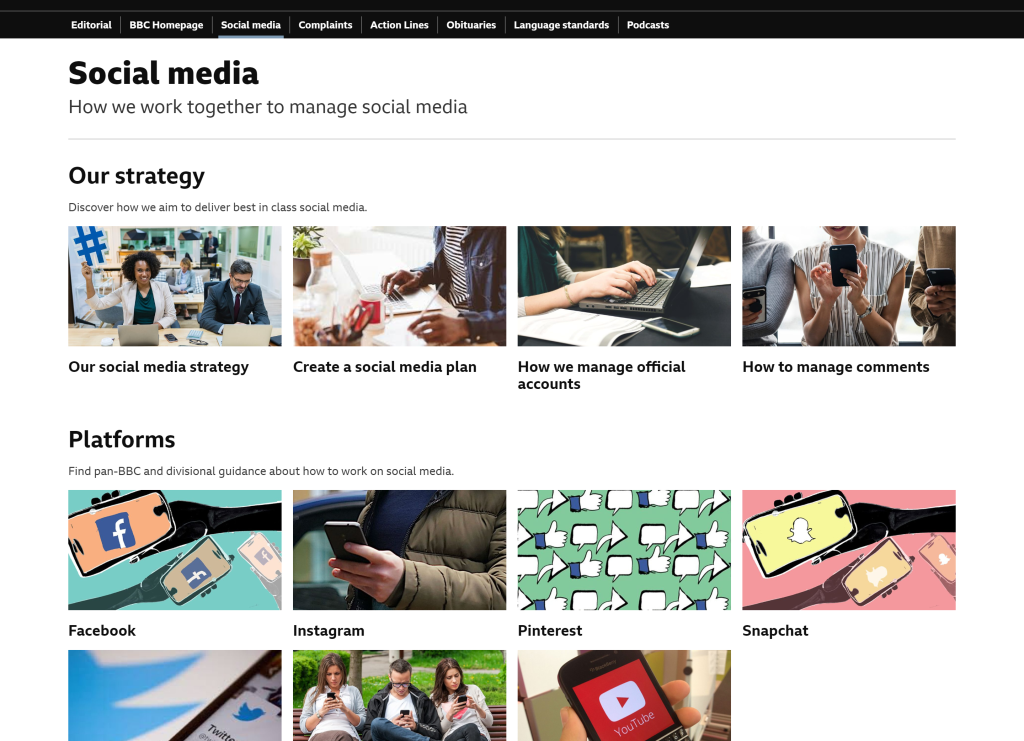
  • Gateway Feedback Tool: Developed and moderated a closed-loop system for real-time performance monitoring.


Why it matters

We reimagined fragmented guidance as a connected service ecosystem and transformed how the BBC served its employees.

The work reduced reliance on support teams by grounding service design in operations, information architecture, and content governance that put the user first.

By identifying wastes, codifying RACIs, and automating onboarding, I supported the transformation of a slow process into structured, measurable operations.

Shopping Basket